




Every team is either drifting toward mediocrity or intentionally fighting against it.
It’s the middle of summer. You’re standing waist-deep in the ocean with your family, enjoying the waves. The beach is packed. Kids are laughing. Music drifts through the air. The sun is warm, and for a few minutes, life feels wonderfully simple.
Every few moments another wave rolls in. You brace yourself, laugh, and keep talking.
You never decide to move. In fact, you’re convinced you’ve been standing in the same spot the whole time.
Then you glance back toward the shore. Somehow, your chair and umbrella aren’t in front of you anymore. It’s fifty yards down the beach. You look around and realize you’ve drifted a long way from where you started.
You never intended to move – You simply underestimated the current. The most dangerous part of the drift is that you don’t realize when it is happening.
Unfortunately, neither do most teams… No team accidentally becomes great. Every great team becomes great on purpose. Every mediocre team becomes mediocre by default.
The Current Never Stops
It is always pulling teams away from excellence. Whether it is entitlement, comfort, distractions, complacency, satisfaction in successes or disappointments in failures. One of these or another will always be pulling a team away from greatness. No one ever has to coach selfishness or encourage excuses. Those things will shift and sway others naturally.
The current also doesn’t care how talented your team is.
It pulls on state champions and first-year programs alike. It pulls on seniors and freshmen. Veteran coaches and rookie coaches. Talent may help you win a game, but it won’t keep your culture from drifting.
In fact, talented teams are often the easiest to deceive. Winning can mask complacency. Success can hide small compromises. Before long, what was once a championship culture begins relying on yesterday’s accomplishments instead of today’s discipline.
Mediocrity is the default setting of every team that stops leading intentionally.
The Drift Is Inevitable – But Not Invisible
Everyone expects the current to move them. The problem isn’t that drift can’t be seen—it’s that few people are looking for it.
It begins with one missed workout. One late arrival. One lazy effort. One player rolling their eyes. One excuse that goes uncorrected because “it’s not a big deal.”
None of those moments sink a culture by themselves. Together, they quietly move a team far from where it intended to be.
Leaders Watch What Others Ignore
At some point in the ocean, someone speaks up to let everyone know how far they have drifted. Every group has one person who notices first.
Maybe they’re the one who looks back toward the beach.
Maybe they’re the one who realizes the walk back to the umbrella is much farther than expected.
Someone always notices before everyone else.
That. Is. Leadership.
Real lifeguards warn the drifters before they have gone too far. They speak up at the first missed workout, late arrival, or dismissal of coach’s instructions. They are saving lives before the threat is imminent. They must have a healthy level of worry to the extent that they are concerned for the well-being of their teammates.
While others are unaware in the midst of the comforting waves, the lifeguards are keeping watch on the shoreline. These leaders are not just projecting their vision onto others, they are correcting the direction of the team.
Great leaders aren’t always making dramatic saves. Most of the time they’re simply noticing what everyone else overlooks.
Defeating The Drift
When you are in the ocean and realize it is time to go back to shore, most of the time your first instinct is to find your umbrella, towel, chair, cooler, etc. But you quickly realize everyone brought their beach necessities as well and from that distance, they all look just about the same.
The mistake most people make is searching for things that move. Beach chairs get folded. Umbrellas shift with the wind. Families pack up and leave. If that’s all you’re looking for, you’ll never know exactly where you belong.
Instead, you look for something fixed. The pier. The lifeguard stand. The hotel. Something that hasn’t moved no matter how much the current has.
The same principle applies to your team…
You can’t correct your position by something anyone and everyone does. It should be different, it should be unique to your team. Maybe even cultivated by your players themselves.
If teams need a shoreline, what is yours? What are you using to redirect and correct?
Not just a poster on the locker room wall.
Not just a mission statement printed in a handbook.
But a deeply understood identity.
Who are we? What do we value?
–Or– (sometimes more importantly)
What do we refuse to become? What standards will never change?
They should be different and unique to your team. Every successful program has standards. But the best programs own them.
Their standards aren’t copied from a clinic notebook. They aren’t always borrowed from another coach’s social media. They are cultivated for your specific team. Your standards do not have to be unlike anything another program has ever used. But they must be more than borrowed words. Your team must understand them, own them, and recognize how they manifest in daily behavior.
They’ll be fought for. Repeated. Lived. Protected.
It has to be something that doesn’t move while the current culture around you is.
Coaches need a shoreline that is fixed and visible. Something they return to when emotions, success, failure, expectations, and distractions begin pulling them in different directions. Without one, you’ll spend your season chasing the opinions of parents, the pressure of wins and losses, or whatever trend happens to be popular that week. The success of your season should depend on the direct correlation to your standards.
Standards don’t exist to impress your players. They exist to reorient them.
When standards are set and constantly enforced, it becomes easy to look back on them and redirect the entire team. They can look back on them constantly, even before things shift to the worst-case scenario. Great coaches will compare their team’s direction to their unmovable standards. Constantly checking the shoreline again and again, and again, and again.
Every experienced swimmer develops a habit. Every few minutes, they glance back toward the shoreline.
Not because they’re afraid. But because they understand something everyone else forgets.
The current never stops.
Great coaches develop the same habit. They keep looking back to their standards.
Their identity. Their purpose. Their shoreline.
Because teams don’t drift into greatness, they repeatedly return to what is fixed.
About The Author
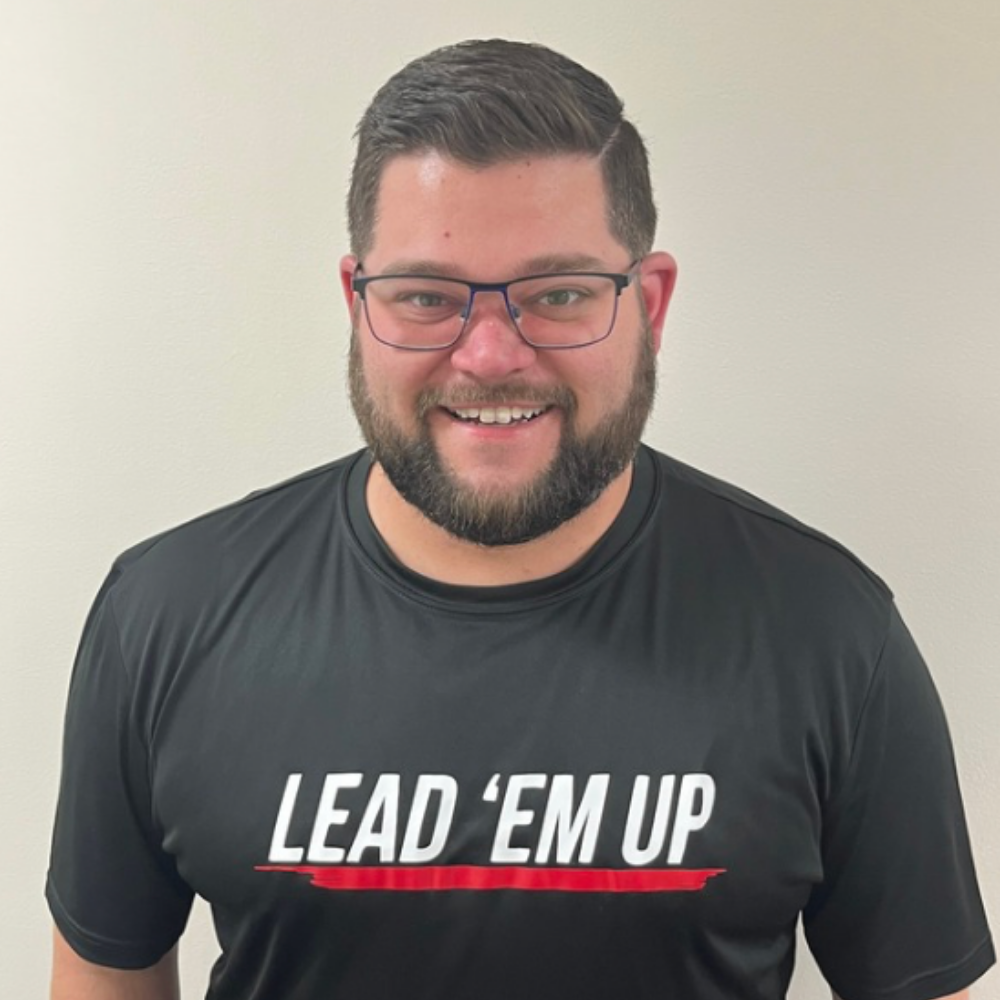
Kaleb Money is a faith-driven leader dedicated to servanthood and investing in others through education and athletics. Whether in the classroom or on the court, he approaches leadership as an opportunity to guide and encourage, modeling strong values.
As the head varsity boys’ basketball coach at Shining Light Academy in Greensboro, NC, Kaleb is the program’s winningest coach with four state titles. While he emphasizes discipline and perseverance to win games, his greater mission is to develop young men of character who carry lessons of responsibility and selflessness into all areas of life.
Beyond his positions at SLA, Kaleb is a regional coach for Lead ‘Em Up, where he helps students and professionals grow in character, accountability, and influence. Through intentional mentorship, he challenges others to embrace positive leadership. Above all, Kaleb is a devoted husband and father; his family is the foundation of his life and the primary motivation behind his commitment to others.